

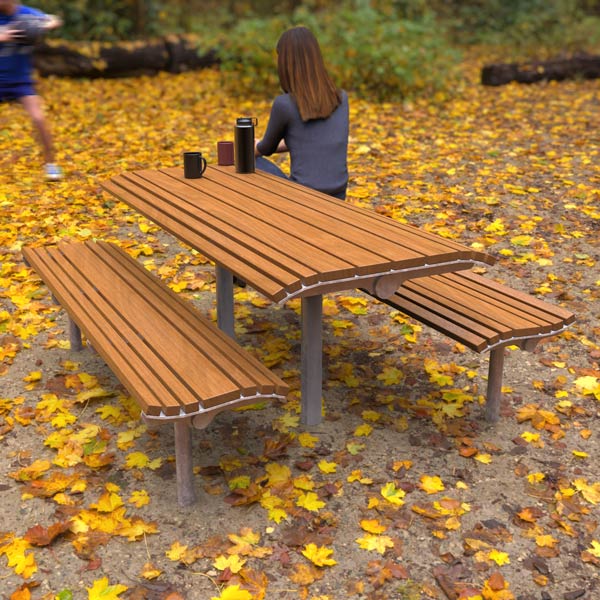
Park usage in Australia is high and growing, with over 1.2 million park visitors in 2023-2024. An important part of the Australian lifestyle, parks encourage outdoor activity and create shared spaces where people can connect. But for many, a park is only truly welcoming if it’s easy to move through and comfortable to stay in.
Inclusive park furniture is one of the simplest and most effective ways councils can improve how people access public spaces. Well-placed outdoor seating can provide a place to rest or to sit and chat. A poorly placed bench can become an obstacle — or worse, a reminder that the space wasn’t designed with everyone in mind.
Read about the key design considerations for inclusive park seating, with a practical focus on park seating in a way that works for everyone.
What are Accessibility and Inclusivity in Park Seating Design?
Accessibility and inclusivity both play an important role in public seating arrangements, but they focus on slightly different outcomes.
Accessibility requires that public spaces meet specific requirements and standards so people with disabilities can physically use them. This refers to compliance with legal obligations, like the Disability Discrimination Act (1992) and AS 1428.2: Design for Access and Mobility. This includes providing ramp access, appropriate seat heights, and enough circulation space for mobility aids. Read more about the requirements for accessible street and park furniture here.
Inclusivity goes one step further. It means designing environments so everyone can use the space safely, regardless of age or ability. Beyond compliance requirements, inclusivity considers sensory and cultural needs, to help people feel like they belong. Together, accessibility and inclusivity help councils create outdoor seating that is not only compliant but genuinely comfortable and usable for everyone.
Why is Inclusive Public Seating Important?
Promotes Equality
Australia’s population is ageing, and 1 in 6 people in Australia has a disability. Accessibility is not a niche issue anymore. Inclusive seating ensures people with mobility limitations aren’t left out because the park isn’t designed for them.
Economic Benefits
When parks are accessible, they attract more visitors and encourage longer stays. This supports local businesses, increases community activity, and improves the return on investment for public infrastructure. Accessible parks are also more likely to be used for events, gatherings, and family outings.
Future-Proofing Public Spaces
Installing inclusive seating helps councils future-proof their parks and reduce the cost of future retrofits. Designing inclusively from the start is always more cost-effective than upgrading later.
Who Benefits from Accessible Public Seating Options?
Accessible outdoor seating benefits a wide range of park visitors, such as:
- Older adults
- People with disability
- Children
- Families with prams
- People recovering from injuries or accidents
- People with sensory impairments
- Carers and support workers
Key Principles of Inclusive Seating in Public Park Spaces
Inclusive seating is guided by these core principles that help ensure the space is usable, safe, and welcoming for all.
Accessibility for Mobility Aids, Strollers, and Sensory Impairments
Seating should be easy to approach and use for people with wheelchairs, walkers, mobility scooters, and prams. It should also be placed and designed with visibility and wayfinding in mind for people with sensory impairments.
Safety and Comfort
Inclusive seating must be physically safe and comfortable, with supportive features like backrests and armrests. It should also be installed on stable ground with safe access paths.
Equity in Public Spaces
Accessible seating should not create separate or segregated experiences. People with disabilities should be able to sit with friends and family, not be directed to a different area or a “special” bench off to the side.
Practical Ways Councils Can Create Inclusive Park Seating
Inclusive seating comes down to both product selection and thoughtful design. Here are some ways to adopt best practices for both accessible and inclusive seating.
Get Outdoor Seating with the Right Dimensions
Choosing the right bench design is essential for safety, comfort, and ease of use. To ensure DDA-compliance, councils and designers should consider seats with:
- Recommended seat height: approximately 400–450mm
- Recommended armrest height: approximately 260mm above seat height
- Recommended backrest height: typically 300–350mm above seat level, depending on the design
These dimensions help ensure seating is comfortable, supports good posture, and assists in safe transfers. This directly supports the principles of safety, comfort, and equitable use.

For more information on outdoor seating dimensions that comply with the DDA and AS 1428.2 requirements, read our guide on DDA-Compliant Street Furniture.
Mix of Seating Options
Rather than designing for one “standard” user, a park should offer a range of seating styles. Inclusive seating design in a park would include:
- Benches with backrests and armrests for support for the elderly
- Benches without armrests to allow easier sideways transfers for people using wheelchairs or scooters
- Seating clusters that allow groups to sit together
- Table settings integrated with wheelchair and pram access and circulation space
- Seating at different heights for children
- Inclusive group seating near high-use areas like playgrounds, BBQs, and sports zones
This directly supports equity in public spaces and avoids segregated seating where some users are forced to sit away from others.
Prioritising Accessibility Beyond the Seat
Accessible seating isn’t just about the bench itself — it’s about the full journey to reach it and use it. Inclusive design would ensure that seating is accessible for all. Councils and architects should ensure that the park has:
- Clear, step-free pathways leading to seating
- Access paths into and around the seating area that are clearly visible and easy to follow
- Stable, hazard-free surfaces (not soft turf or loose gravel that can be difficult to access via mobility aids)
- Space beside seating for wheelchairs, scooters, and prams to park
- Sufficient turning radius and circulation space for prams, wheelchairs, and scooters
This ensures that seating feels intuitive rather than difficult to reach if you’re using mobility aids.
Adding Seats at the Right Places
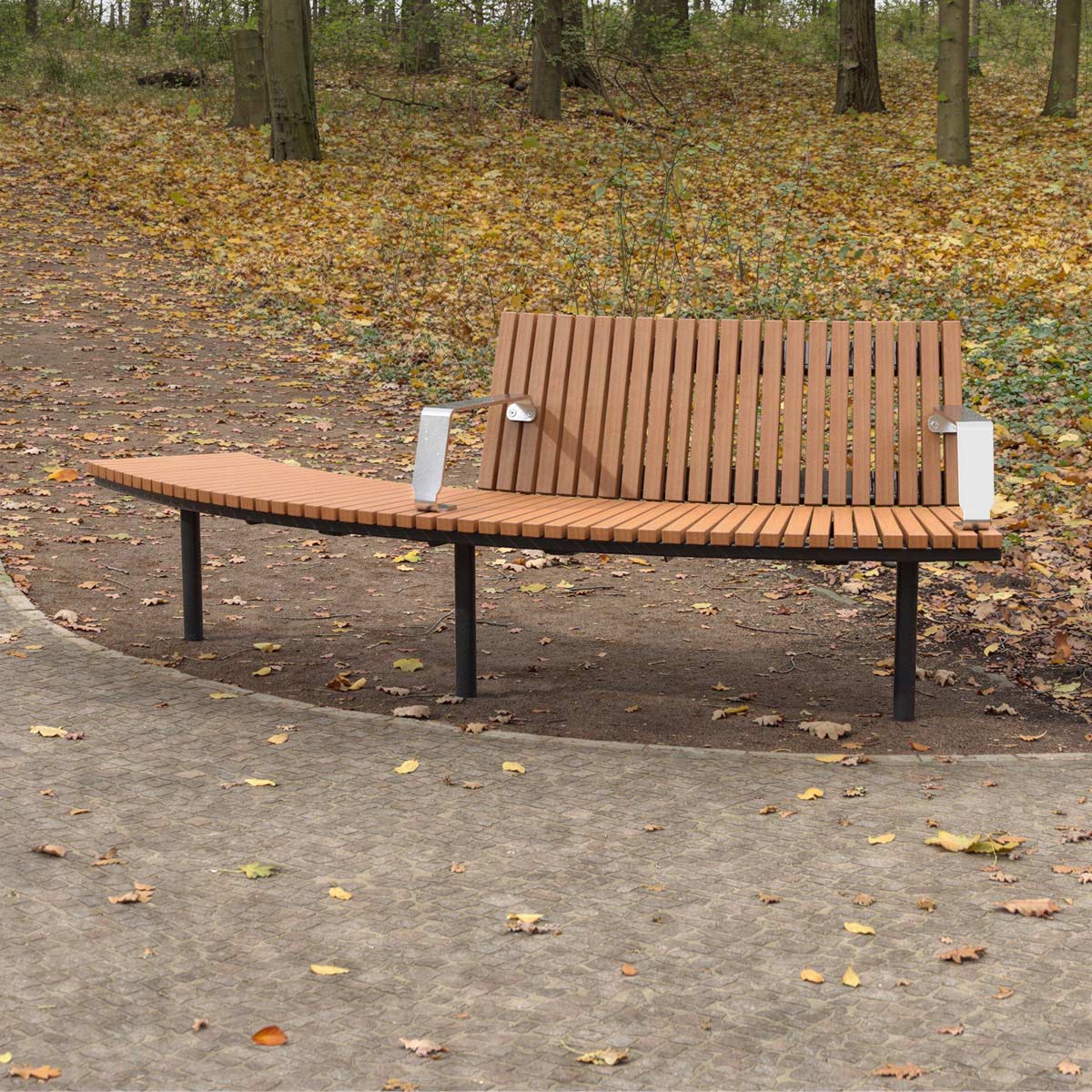
Even well-designed seating layouts fail if they’re installed in the wrong locations. Thoughtful seating placement supports the principle of equitable access. When rest points are predictable and conveniently located, people of all ages and mobility levels can navigate the park with confidence and comfort.
Best practice includes installing seating:
- At regular intervals along walking and cycling trails, so the elderly and families can rest and take breaks
- Near entrances and close to facilities like car parks, toilets, bike racks, drinking fountains, and outdoor bins, to allow easy access for all
- Near play spaces, BBQ areas, and sports areas, so everyone can remain close to shared activities
- At rest points on slopes or long paths to allow people to take breaks
Add Shade and Shelter
Seating that is exposed to heat or rain quickly becomes unusable. Providing shade and shelter reflects inclusive design in action. It recognises that comfort thresholds vary across older adults, young children, and people with certain health conditions, who are particularly vulnerable to heat and weather exposure. By protecting users from the elements, parks remain welcoming and usable across seasons and throughout the day.
Councils can improve usability by:
- Using tree seats that take advantage of the natural tree cover
- Installing shade structures and park shelters over key seating zones, like BBQ and camping areas
- Providing shelter near playgrounds, picnic areas, and pathways
- Selecting materials that don’t retain excessive heat
Draffin Project with Inclusive Park Seating
Here’s an example of how the team at Draffin Street Furniture applies these principles in real council projects.
Ed Webb Park, Noosa
Ed Webb Park is a park behind a surf lifesaver clubhouse that was recently upgraded to improve accessibility for locals and visitors.
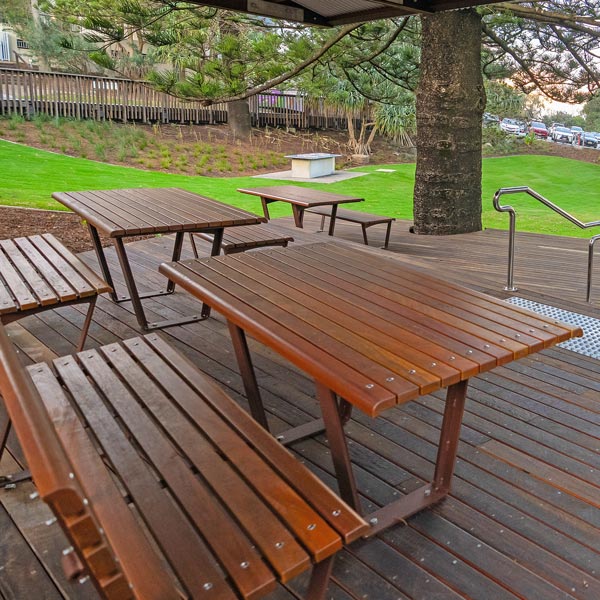
Draffin Street Furniture supplied park benches and tables from the Kiama suite to create picnic spaces. By adding park furniture in multiple configurations, spaces are set up for accessible functionality. Benches use:
- The table’s inset leg for an accessible end position
- A shorter bench to provide side access
- Removal of one bench entirely for full accessibility along one side.
Variety is a key part of inclusive design here at Draffin Street Furniture because different users require different levels of support.
Make your Park Inclusive and Accessible
Inclusive seating is about more than meeting standards — it’s about creating parks that reflect the real needs of the community. With inclusive outdoor seating, parks become places where everyone can rest and enjoy green spaces without barriers.
If you’re planning a new park or upgrading an existing one, and are looking for street and park furniture, you’re in the right place. Contact the team at Draffin Street Furniture, and we can help with consultation, design, manufacturing, and installation of outdoor furniture. At Draffin Street Furniture, we work with councils across Australia to design and manufacture outdoor seating that supports accessibility, compliance, and long-term durability in public environments.