


Street furniture is a deceptively tough job, and choosing the right material for street furniture is one of the most important decisions in any project. It needs to look good, stay safe, often be compliant, resist weather and vandalism, and feel comfortable to use, all while maintaining value over time. And while appearance would be number one on the list for most customers, there are many other factors that will sway the choice towards something more appropriate for the application.
The “best” material isn’t universal. The best choice depends on factors specific to your use case. Location, climate, foot traffic, desired aesthetic, maintenance capacity, and budget are among the most common variants.
This guide breaks down the most common street furniture materials, how they perform, their benefits, and what to look for when specifying them.
What are street furniture materials?
Street furniture materials are the physical substances used to manufacture public-space fixtures, like benches, bins, bollards, bike racks, shelters, planters, railings, and signage so they can withstand weather, heavy daily use, and vandalism while staying safe and attractive.
Common materials used in street furniture include metals (stainless steel, galvanised steel, aluminium), timber (hardwood and engineered wood), concrete and stone (precast concrete, natural stone), and plastics/composites (recycled plastic lumber, wood–plastic composites), usually finished with protective coatings (powder coating, galvanising, anodising, anti-graffiti treatments) to extend lifespan and reduce maintenance.
With those in mind, let’s explore the major categories.
Materials used in street furniture
Stainless Steel
Stainless steel is one of the most dependable materials for street and outdoor furniture. Its strength, versatility, and exceptional corrosion resistance make it a long-term solution for public spaces. This makes stainless steel a top choice for high-exposure, high-use environments.
What is stainless steel?
Stainless steel is a generic term for corrosion-resistant steels that contain more than 10.5% of chromium. The chromium forms a thin, invisible protective layer that shields the surface underneath from rust and corrosion. This film self-repairs when exposed to oxygen or when damaged by abrasion.
This self-protecting quality is what gives stainless steel its durability and longevity in outdoor environments.

Pros of stainless steel street furniture
- Corrosion-resistant: One of the standout advantages of stainless steel is that it has very high corrosion resistance. The chromium content actively protects the surface, even when the furniture is exposed to rain, humidity, heat and abrasions.
- Practical: Stainless steel can be easily cut, welded, formed and fabricated without losing any structural strength. For example, they can be easily moulded into tree bench seats.
- Lifecycle value: While the upfront cost is higher than that of alternatives, stainless steel’s long service life and minimal maintenance requirements result in lower long-term costs. Stainless steel furniture does not need regular repainting or sealing, and routine cleaning is generally sufficient to keep it in good condition.
- Sustainability: Stainless steel is 100% recyclable, making it a responsible choice for long-term public infrastructure projects.
- Aesthetic: Stainless steel delivers a sleek, modern appearance that fits in with many public-use environments. It maintains its look well over time and does not degrade or flake.
Cons of stainless steel street furniture
- The primary drawback of stainless steel is cost. The initial investment is higher than the cost of materials such as aluminium. When choosing which is better, consider that stainless steel is often offset by its durability, longevity and reduced maintenance over the life of the furniture.
Best environments for stainless steel furniture
For outdoor street furniture, Draffin uses two grades of Austenitic stainless steel: 304 and 316.
- Grade 304 stainless steel is typically the starting point for furniture in indoor or outdoor urban environments. Grade 304 performs reliably in high-temperature conditions, including extreme heat above 50°C.
- Grade 316 stainless steel offers more corrosion resistance in warm chloride environments than Grade 304. Grade 316 is the preferred choice for coastal, seaside, and more aggressive applications. It is commonly used for sea-facing buildings, piers, in areas constantly exposed to the sun, and furniture located near the ocean.
Best applications for stainless steel street furniture
Stainless steel is a popular, versatile material, making it the recommended choice for many applications. Such as:
- Coastal promenades and foreshore precincts
- Transport hubs like train stations, tram stops, ferry terminals, and bus interchanges
- CBD streets and high-footfall retail strips
- Hospital and healthcare precincts
- Education campuses
- Parks and playground edges
- Waterfront and marina infrastructure
- Civic squares and event spaces
- Cycling corridors and end-of-trip areas
- Stadiums and major venues
- Food precincts and markets
Draffin Projects with Stainless Steel Furniture
Cape Bridgewater Foreshore
Cape Bridgewater is known for having salty offshore weather. All pieces were made of marine-grade 316 stainless steel, which was electropolished for further corrosion protection. The battens were made of Grade 1 spotted gum timber. The project used products from the Airlie suite of street furniture.

Finish options for stainless steel
Stainless steel can be supplied in a variety of finishes, each offering different aesthetic and practical benefits. These options include:
- Brush finish: shiny finish with a directional grain in the surface
- Bead blasted: lux, uniform, textured finish
- Mirror finish: reflective finish on the surface
Draffin Street Furniture also offers an Electro Polish finish, which provides the highest corrosion resistance. It adds brilliance and lustre and can be applied to the brush and bead-blasted finishes.
For more details about finishes, read our tech note on stainless steel finishes.
Maintenance and durability of stainless steel street furniture
Stainless steel is low-maintenance and delivers exceptional long-term durability, making it a smart investment for public spaces where reliability, safety and appearance must be maintained over decades rather than years.
A City of Melbourne life-cycle costing case study reported that Stainless steel street furniture products realised a financial saving of AUD 6.2 million over a 25-year term or AUD 250,000 per year when compared with carbon steel. The stainless steel products are expected to last much longer than 25 years, delivering further cost savings for the City of Melbourne. While there may be a higher capital cost initially, the benefits of using stainless steel are unmatched in terms of material performance and reduction in ongoing maintenance and life-cycle costs.
Galvanised Steel Street Furniture
Galvanised steel street furniture offers reliable performance when exposed to rain, UV, abrasion and daily use. It is a cost-effective and durable material that reduces the need for frequent repainting, repairs or replacement, making it a dependable and economical choice over time.
What is galvanised steel?
Galvanised steel refers to steel coated with zinc. The zinc coating process (known as galvanisation) acts as a protective barrier, significantly slowing corrosion. It is particularly valued in public environments that are constantly exposed to weather, physical wear, and vandalism. Visually, galvanised steel has a textured appearance, which is a natural result of the coating process and part of its aesthetic.
Pros of galvanised steel street furniture
- Corrosion-resistant: Galvanised steel furniture has excellent resistance to rust and corrosion. The zinc coating protects the steel beneath even when the surface is worn.
- Economical: Compared to stainless steel, galvanised steel has a lower upfront cost while still delivering strong performance in demanding outdoor settings.
- Durability: Galvanised steel is tough, impact-resistant and well-suited to public areas where furniture must withstand heavy-duty use and occasional misuse.
- Sustainable: Galvanised steel is recyclable, making it a responsible choice for builders and architects.
Cons of galvanised steel
- If galvanising is not done properly, the zinc layer can peel or chip, exposing the furniture to corrosion.
TIP: The effectiveness of galvanised steel depends on correct processing. The most effective method of zinc-coating is hot-dip galvanising. During this process, the steel is fully immersed in molten zinc, creating a thick coating that protects the surface against corrosion. This is why it is critical to use a trusted manufacturer, such as Draffin, when investing in galvanised steel outdoor furniture.
Best environments for galvanised steel street furniture
Galvanising provides a high level of corrosion protection, making galvanised steel suitable for most environments except marine and coastal. It performs particularly well in urban areas, where exposure to pollution, rain and temperature variation is common. In these settings, galvanised steel offers a strong balance of durability and cost efficiency.
Finish options for galvanised steel
- Galvanised steel street furniture is commonly supplied in either a raw galvanised finish or a powder-coated finish.
- A raw galvanised finish highlights the natural texture and industrial character of the zinc coating, providing direct corrosion protection.
- Powder coating can be applied over galvanised steel to achieve a specific colour or aesthetic. Powder coating is primarily a visual finish — the corrosion protection comes from the galvanised layer beneath, not the coating itself.
Galvanised steel is best for:
- Schools use it as it is an economical and low-maintenance option. It is a strong material, which makes it durable enough to stand children’s rough-and-tumble play. When powder-coated, colours can be matched to school branding while retaining the strength of the galvanised base.
- Large-scale municipal projects
- Inland or low-to-moderate corrosion environments
- Urban areas away from coastal regions.
- Decorative benches and planters
Draffin Project with Galvanised Steel Furniture
Upgrading the Camberwell Fresh Food Market
Draffin Street Furniture was responsible for supplying furniture pieces that add more dating space outside the Camberwell Fresh Food Market. This included seats with backs, benches, tables and small coffee tables.
All new furniture additions were made in galvanised steel and powder-coated a bright green to highlight the new additions. Galvanised steel was an economical and durable option for a busy public-use area and could easily be powder-coated in green.

Maintenance and durability of galvanised steel street furniture
Galvanised steel is a low-maintenance material. With appropriate cleaning and correct processing, galvanised steel offers strong long-term durability.
Aluminium Outdoor Street Furniture
Aluminium is a popular choice for street furniture, thanks to its unique combination of versatility, lightweight properties, and long-term durability.
Because aluminium does not rust, warp or rot, it is highly resilient in outdoor conditions. With appropriate care, aluminium street furniture maintains both structural integrity and aesthetic appeal for years, making it a highly durable investment for public spaces.
What is furniture-grade aluminium?
While pure aluminium is naturally soft, furniture-grade aluminium is an alloy. It is strengthened by alloying aluminium with other metals such as zinc, magnesium or copper. These alloys retain aluminium’s lightweight nature while enhancing its structural strength, making it highly suitable for outdoor furniture applications.
Pros of aluminium street furniture
- Corrosion-resistance: Aluminium has a natural film of aluminium oxide on its surface. This film instantly reforms after being scratched or damaged, which provides aluminium furniture with its strong corrosion resistance.
- Flexible: Aluminium’s properties ensure that it can be easily shaped and cast into the shape of furniture.
- Lightweight: Aluminium weighs only one-third as much as a piece of steel of the same shape and size.
- Sustainable: Aluminium is 100% recyclable, which makes it a responsible choice for long-term investments.
- Heat resistant: Aluminium distributes heat evenly across the structure and sheds the heat more quickly than most other materials. It is generally the better choice for hot environments or sites with high sun exposure
Cons of using aluminium street furniture
- Aluminium is durable, but not as strong as steel.
- Aluminium furniture is more prone to damage under heavy use or vandalism.
Best environments for aluminium street furniture
Aluminium furniture is well-suited to tropical and humid regions. Its natural resistance to corrosion and rust ensures that your furniture withstands exposure to salty air and humidity.
You can also use aluminium furniture in indoor or outdoor urban areas that require furniture to be moved around, such as food courts. Its lightweight nature makes furniture easy to move.
Finish options for aluminium
- Powder-coated: Provides a durable coloured finish that matches your style with minimal maintenance.
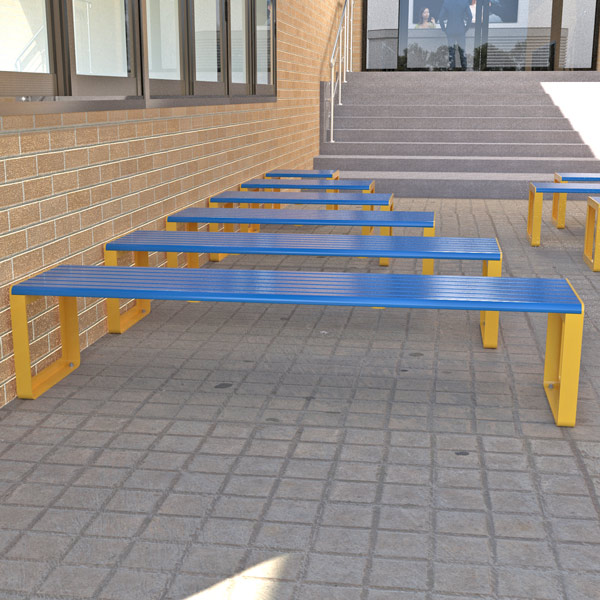
- Anodised aluminium: Offers a metallic finish that provides long-term corrosion resistance.

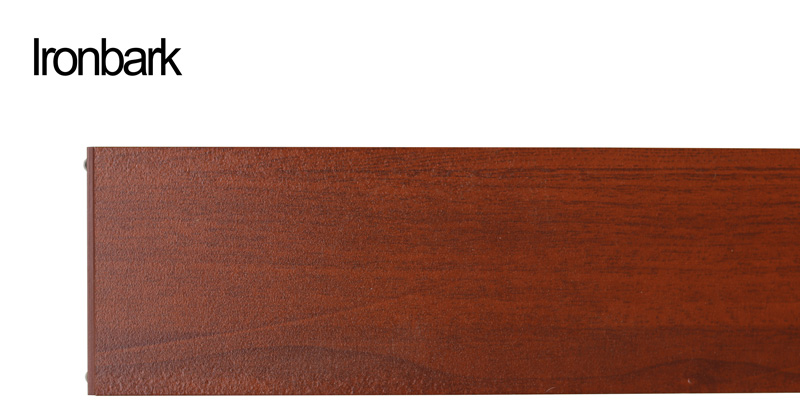
- Timber-look aluminium: Combines the aesthetic of wood with the durability of aluminium to suit your design scheme. We offer three options: alpine ash, mountain gum, and ironbark.


Aluminium is best for:
- Coastal and marine environments
- Temporary or relocatable installation
- Transit stations and transport hubs
- Tropical and high-humidity climates
- Schools, corporate campuses and tech parks
Draffin Project with Aluminium Furniture
Field of Light, Uluru
This massive installation required rest stops where people could sit and take in the view. Aluminium was the perfect material for the dry, desert heat of Yulara. The timber-look finish helped the Kiama freestanding bench seat fit into the natural landscape of the installation. The lightweight nature of aluminium meant benches could be easily repositioned according to seasonal changes or shifting views.

Maintenance and durability of aluminium street furniture
Aluminium is inherently low-maintenance, but regular cleaning is recommended to keep it looking its best.
Timber Street Furniture
Timber is a classic choice for street and park bench seats. Its organic and warm aesthetic balances out busy urban environments. In natural surroundings, timber blends in seamlessly. This aesthetic is difficult to replicate with synthetic materials. Modern processing has ensured that timber street furniture is more durable than ever.

TIP: At Draffin Street Furniture, we prioritise high-quality, functional timber products that enhance public spaces while remaining sustainable and durable. For our street furniture range, Spotted Gum is the timber of choice. dense timber selected for its durability and wavy grain characteristics that produce an attractive ripple effect. As timber becomes harder to source, manufacturers struggle to find reliable, renewable sources. This Class-1, furniture-grade Spotted Gum hardwood is PEFC certified, which means it comes from sustainably managed forests.
Spotted Gum timber furniture can remain functional and visually appealing for decades, providing a high-quality addition to any public-use environment.
Pros of timber street furniture
- Durable: Spotted Gum’s natural hardness and density make it highly resistant to daily wear-and-tear and impact.
- Aesthetic integration: Timber blends seamlessly into outdoor environments such as parks and landscaped areas, offering a warm, natural appearance.
- Sustainable: PEFC certification ensures that the timber products support both environmental and social sustainability in your project.
- Versatility: Spotted gum can be manufactured into creative, functional designs, making it ideal for crafting benches, tables, shelters, and other street furniture.
- Compatibility: It is highly compatible with materials like metal and concrete. For example, a bench can use timber battens with a metal frame, which combines beauty with structural strength.
- Availability: Readily available
Cons of timber street furniture
- Timber must be properly treated before use to prevent rot, fungal growth and splinters. Working with a trusted supplier like Draffin minimises these risks.
- Like all timbers, Spotted Gum is prone to splitting and cracking if not regularly maintained.
- Inconsistent Colour and Grain (part of the natural charm of timber)
- Leaching (or tannin bleed) is a natural process in which tannins and resins from timber are released and seep out when the wood is exposed to rain. It causes brownish or reddish stains on surrounding surfaces, such as concrete. This is an aesthetic issue and can be managed with proper recoating, often every 12 months.
Best environments for timber street furniture
Timber furniture is suitable for all climates. Unlike metals, timber does not heat up excessively in direct sunlight, making benches and seating comfortable to use even on hot days.
Finish options for timber furniture
To protect timber furniture against the harsh Australian environment, Draffin uses the Intergrain Ultradeck finish. This coating is:
- Dirt and stain resistant, keeping furniture looking clean and well-maintained
- Long-lasting, providing protection against UV exposure, moisture and abrasion
- Environmentally friendly, emitting significantly less VOCs than traditional decking oils
- Natural in appearance, preserving the inherent beauty of Spotted Gum while enhancing its durability.
Spotted gum timber is best for:
- Natural bushland parks and reserves
- Streetscapes
- Tourism sites
- National parks and camping grounds
- School grounds & early learning centres
- Coastal boardwalks and beach access paths
- Resort pools and spa surrounds
- Community gardens and environmental education centres
Myrtle Street’s Streetscape Enhancement
Myrtleford sits at the base of Mount Buffalo, which is well known for its icy, snowy conditions in winter.
The materials used in the furniture suite had to withstand harsh climates. Solid spotted gum timber battens formed the tops, finished in a clear stain to let the natural characteristics shine. Galvanised mild steel formed the frames, powder-coated in a slate grey.

Maintenance and durability of timber
Timber street furniture, while naturally durable, benefits from regular maintenance to maximise its lifespan. Periodic inspection and reapplication of protective coatings ensure timber remains resistant to moisture, fungal growth, and abrasions.
Recycled Plastic and Composite Materials in Street Furniture
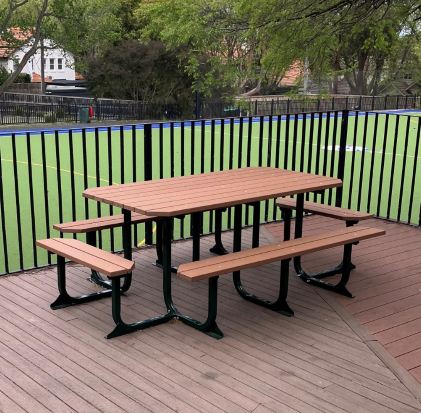
Recycled plastic and composite materials are increasingly used in street furniture, where low maintenance and durability are key considerations. Composite materials are made from post-industrial plastic waste and agricultural by-products like rice husks. The result is a product that does not rot or splinter and requires minimal upkeep over its lifespan. Their flexibility means they can be formed into a wide range of shapes and finishes, making them versatile for various design applications. Additionally, using recycled plastics contributes to sustainability, diverting waste from landfills and into reusable products.
However, there is a major limitation to these materials. They are prone to heat-induced deformation. In hot climates, excessive exposure to sunlight can cause boards or battens to sag. This is particularly common in designs with long battens and two-leg supports. The insufficient structural backing in the middle allows the material to sag over time.
TIP: While the two-leg variations that are available on the market may be a cheaper option, they often require early replacement due to insufficient structural support in the middle, where the batten sags. To address this, Draffin always specifies three-leg supports for furniture made from recycled plastic or composite materials, ensuring stability and longevity.
Pros
- Sustainably produced
- Cost effective
- No maintenance
- Uniform finish
Cons
- Not as strong as timber products and may require extra batten support. (Our furniture products will be engineered to accommodate the strength of the battens)
Important considerations beyond the material
Selecting the right material for street furniture is rarely about a single factor. Before diving into material options, it can help to anchor decisions around a few practical factors:
Budget
Budget is often one of the first considerations, particularly for large-scale projects.
A lot of the variance in costs is due to how the material is sourced and manufactured. Some batten materials can be made economically, like aluminium (one of the world’s most plentiful metals), which uses a mix of newly extracted materials and efficiently recycled materials. A small amount of man-hours is required to produce aluminium once the facilities to manufacture it are set up. While, on the other hand, timber needs to be grown in large plantations, then harvested, and finally milled. The effort involved to produce both is very different.
We recommend evaluating cost across the entire lifecycle of the product, not just the initial purchase price. Lower-cost materials may look appealing, but they require more investment over time.
How important is design customisation?
Design customisation plays a significant role in how well street furniture blends into its surroundings. It’s important to consider design customisations such as finishes, colours, and other customisations needed, as not all materials are suited to such customisations. For example, a park bench may feature timber seating for warmth and comfort, while the steel frame is colour-matched to a council’s branding.
How flexible are the materials?
Most street furniture materials offer a good degree of flexibility, but some are easier to work with than others. Steel and aluminium are among the most flexible materials from a fabrication perspective, for example. Consider your requirements and talk to a company like Draffin about your vision, to see which materials will work best within your timeline and budget.
DDA compliance considerations
DDA compliance is less about the material itself and more about how the material is used. Compliance is decided by the design and installation rather than whether the furniture is made from steel, aluminium or timber. Factors such as seat height, armrests, spacing and placement all influence compliance outcomes. Colour contrast may limit paint or powder-coating options when visual contrast is required. Considering your council and government compliance, and the level of customisation required, can influence whether compliance is achievable for certain materials.
Sustainability
The move towards more sustainable street furniture materials has prompted furniture manufacturers to search for material alternatives. And while many materials have been promoted as more sustainable than others, none will match the sustainability of wood, provided it is sourced from a sustainable plantation.
Many manufactured materials have changed their manufacturing processes to include recycled elements, whether partly or wholly. However, the process of recycling waste products into new materials usually leaves a large carbon footprint, can be costly, laborious and potentially harmful to our environment as well. None will match wood’s ability to capture carbon.
Location
While urban settings will suit one material, bushland settings may not suit the same. Timber is almost always suitable in most urban or bushland settings, but may be dependent on the style of the furniture also. Or will the furniture be installed in a coastal location? Maybe even an area that experiences regular extreme weather like high temperatures or snowy alpine settings? These scenarios will greatly change the material choice if you want the furniture to look and perform at its best year after year.
Maintenance requirements
Maintenance is an important consideration, particularly for councils and organisations managing large networks of public furniture. Ensure you choose materials that will work with your maintenance budgets and resources.
The Draffin Difference
Ultimately, the Draffin difference is about confidence in long-term outcomes. We build street furniture that is engineered, finished and supported to meet the realities of public space use, ensuring long-term value.
Quality Manufacturing
Many street furniture products are manufactured to meet a price target first, but they might compromise on preparation, structural support, or finishing processes. While this approach may reduce upfront costs, it often leads to premature wear and tear and earlier replacement costs.
At Draffin, our approach is fundamentally different from price-point manufacturing. We prioritise correct preparation and specification at every stage, from selecting the appropriate material through to finishing.
Long-term performance outcomes
The result of this preparation-led approach is street furniture that performs consistently in harsh Australian conditions. Draffin products are designed to withstand UV exposure, heavy use, and environmental wear-and-tear without compromising on structural integrity.
Get in Touch for Your Next Project
Looking for street and park furniture for your next project? Contact Draffin Street Furniture suppliers, and we can help with consultation, design, manufacturing, and installation of commercial outdoor furniture.