


Park shelters shape how people experience public spaces. From school campuses and hospital grounds to busy public reserves, the right park shelter design can transform how a space is used and enjoyed, encouraging people to stay longer, feel safer, and make use of community spaces. In Australia’s high-UV climate, UV protection also plays a genuine health role; according to Cancer NSW, well-designed shade can reduce UV exposure by up to 75%.
For councils, designers, and specifiers, the challenge is balancing durability, urban design, compliance requirements and budget while still delivering spaces that support real community use. This guide covers five key environments for park shelter applications and what each setting demands from design.
Note: Draffin Street Furniture offers compact all in one park shelters suitable for standalone seating and table applications. For DDA compliant park shelters with tables, a larger multi-product solution is recommended, consisting of a furnished shaded structure large enough to accommodate the wheelchair accessible table settings. (recommended minimum – 15m²) This also provides a significantly larger choice in DDA compliant furniture options from Draffin’s standard product range.
Park Shelter Design for Aged Care Facilities
At residential aged care facilities, park shelters encourage residents to spend time outdoors. Even short periods outdoors can improve their quality of life and encourage gentle physical activity, like walking. A recent study from the National Ageing Research Institute reported that access to outdoor spaces reduced depression, stress, falls, and vitamin D deficiency among residents of aged care facilities.
What Aged Care Park Shelters Need to Get Right
Accessible Design and DDA Compliance
Shelters must be fully accessible, with level access from nearby pathways. This helps meet Australian DDA compliance (AS 1428/DDA), provides access for people who use mobility aids such as walkers, and reduces the physical strain of reaching them.
Provide Reliable Shade
Orient shelters to block the harsh northern and western sun, and specify roofing materials with a minimum UPF 50+ rating. For aged care settings, a shaded area of at least 15–20 m² ensures there’s room for wheelchairs and companions to sit together comfortably out of direct sunlight.
Material considerations
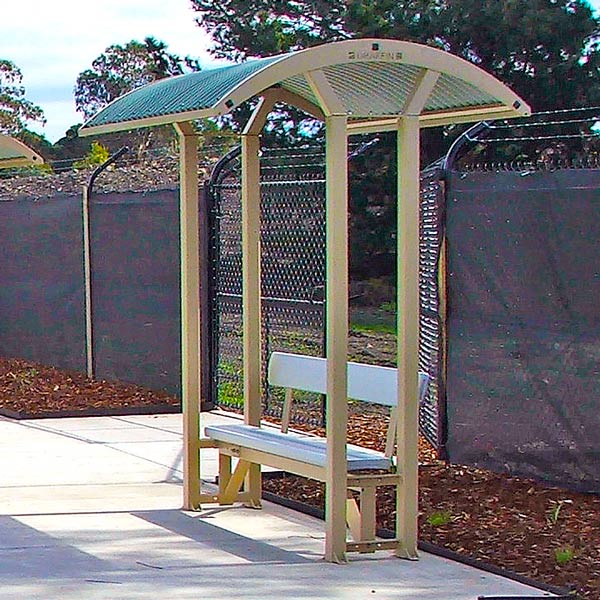
Aluminium park shelters are an excellent choice for shade structures. It is extremely durable, maintains thermal comfort even in sunny or hot weather, is low-maintenance, and resists rot.
Expert Tip:
When the Draffin Street Furniture team works with aged care spaces, we suggest considering the community’s usage patterns first. If you have residents who like to gather in open community spaces for social interaction, picnic shelters would be a better option. If you’re planning an outdoor space in your aged care space and would like advice, contact our team.
Safety Features That Support Independent Outdoor Use
In this environment, success is measured by user comfort. If residents can reach it safely and enjoy the park shelter, the shelter is doing its job. These are some things to keep in mind while creating safe park shelters for seniors:
- Clear visibility from inside the facility for passive supervision
- Non-slip, even surfaces to reduce fall risk
- Sturdy seating, backrests, armrests, or supports that meet Australian accessibility standards (AS 1428.1: Design for Accessibility and Mobility)
Park Shelter Design for Healthcare Campuses
In clinical settings, it is common for patients and caretakers to get stressed. Access to a quiet, sheltered outdoor area with greenery can support patient wellbeing and provide a mental break, providing a needed reprise to patients, caretakers and staff. To support this, healthcare settings are increasingly incorporating outdoor areas as part of patient, caregiver and staff wellbeing.
Designing an outdoor recovery space? Talk to Draffin about shelter options suited to clinical environments.
What Healthcare Settings Demand from a Park Shelter
Low-Stimulation Design for Clinical Environments
Choose shelters with clean, uncluttered forms — avoid ornate detailing or complex geometry that can feel visually overwhelming in a clinical environment. A simple gable or flat roof in neutral tones blends with the built fabric of the facility while remaining calming for patients in heightened states of stress or anxiety.
Inclusive Design and DDA-Compliant Access
Patients, visitors, and staff need inclusive designs for those with limited mobility using wheelchairs or walking aids. Use DDA-compliant seating designs to create inclusive public spaces.
Proximity to Care Areas and Community Use
Shelters and seating areas must be located close to care areas so that patients, families, and staff can access them without long travel distances.
When designing shade structures for hospitals, the design team at Draffin Street Furniture suggests multiple individual structures instead of park pavilions or campground-style configurations. These create communal spaces, while individual structures offer privacy to patients, families, and caregivers.
Expert Tip:
In healthcare settings, shelters require low-maintenance materials that are easy to clean and resistant to wear and tear from frequent sanitisation. Aluminium and recycled plastic or composite materials are durable, corrosion-resistant choices that can handle repeated exposure to harsh sanitation chemicals. Avoid materials like timber that trap dirt or moisture to ensure long-term durability.

Park Shelter Design for Parks, Reserves and Campgrounds
Green areas, such as community parks, reserves, and campgrounds, provide gathering spaces for connection and exercise. Without shaded structures, visitors cannot enjoy the outdoors when it’s sunny, windy, or rainy.
Weather Resilience, Durability and Placement
Weather Resilience
Park shelters should be able to withstand environmental exposure and seasonal changes. Sun, rain, and wind all place demands on materials, structure, and the roof. Aluminium is a good fit for environments with high sun and UV exposure as it distributes heat evenly and sheds heat more quickly than other materials.
Durability for High-Traffic Locations
Durability is critical in high-traffic locations, such as picnic or BBQ areas, which are frequently used by large groups. Look for vandal-resistant materials and designs that can withstand heavy usage.
Low-Maintenance Materials for Remote Locations
In remote locations such as national parks and nature reserves, regular maintenance may not be possible. Aluminium, recycled plastic, or composite materials are sturdy, low-maintenance material choices suited to these environments.
Aesthetic Integration with the Park Landscape
A shelter should also complement the natural landscape and fit in with greenery. For example, timber-look aluminium furniture will fit in well in a national park, while powder-coated council colours on the roof add a touch of personalisation to the area.
Case Study: Ed Webb Park, Noosa
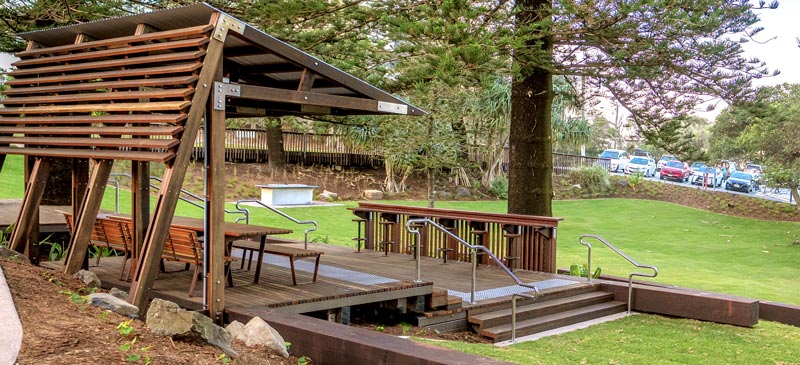
Ed Webb Park, Noosa
Ed Webb Park is an important part of Sunshine Beach and is located close to the Sunshine Beach Surf Life Saving Club. It is a popular spot for families around the club and the nearby town.
Draffin Street Furniture was contracted to supply seating and other outdoor furniture. The project specified standard seating under shades in multiple configurations, which helped create various accessible seating spots.
Outcome: Shelter design and placement respond directly to the community usage patterns. Spotted Gum Timber Battens match the natural feel of the park area.
View similar street furniture projects supplied by Draffin Street Furniture.
Park Shelter Design on Educational Campuses
On campuses, shelters serve multiple roles and accommodate constant, varied use throughout the day.
Design Tips for School and University Campus Environments
Capacity for Group Use at Peak Times
School and university shelters must have the capacity to accommodate a high number of users at peak times, such as lunch breaks. Shelters should provide enough seating and circulation space to comfortably support both small groups and larger groups without overcrowding.
Allow Clear Supervision
Safety and visibility are critical in educational environments. Open shelter designs with clear sightlines allow teachers, staff, and supervisors to easily monitor students without creating enclosed spaces. This is particularly important in primary schools where passive surveillance supports student safety. Positioning shelters near pathways or sports courts also improves natural surveillance and ensures they feel connected to the wider campus environment.
Flexibility Across Classroom, Lunch, and Study Use
One of the biggest advantages of campus park shelters is their flexibility. Throughout a single day, the same shelter may be used as a lunch area, outdoor classroom, waiting zone, or study space. Access to nearby pathways and Wi-Fi coverage can also improve usage, particularly on university and TAFE campuses where outdoor study areas are increasingly common.
Consider Campus Integration and Accessibility
Choose colours, finishes, and structural styles that echo the surrounding architecture and, where appropriate, reflect school branding. Ensure shelters have an inclusive design with level pathways and adequate turning space for wheelchair users, so every student and staff member can use them equally.
Expert Tip:
Material and Layout Considerations for Campus Park Shelters
Materials play an important role here — finishes need to be tough enough for constant use and rough-and-tumble play from students while still presenting a clean, cohesive look that aligns with the school environment. Use durable materials suited to heavy daily use and rough play by students, such as aluminium or steel.
Case Study: Park Shelters on a Queensland School Campus
Beaconsfield State School, Queensland
The school purchased shade structures so that students could enjoy lunch in the shade. The frame is made from galvanised and powder-coated steel. Roof sheets are made from Zincalume steel. Table and seat tops are made from anodised aluminium planks that are durable and easier for children to sit on.
Outcome: These materials are perfect for the school environment and can survive rough play by students. This successful campus shelter adapts effortlessly throughout the day, supporting a wide range of activities without requiring constant management. The furniture was also customised to match the school colours. Contact our team if your school needs customised park shelters.

Using Park Shelters to Design Outdoor Staff Spaces on Corporate Campuses
Workplaces are increasingly integrating outdoor areas to support wellbeing and collaboration. This includes work zones on rooftop terraces or landscaped courtyards. In these contexts, a park shelter shapes people’s experience of the workplace beyond the office, making these outdoor spaces usable year-round.
Corporate Outdoor Space Requirements for a Park Shelter
Integration with Built Environment and Brand Identity
Design should complement the surrounding landscape architecture. The design should also align with the workplace’s architecture and brand identity, for example, by matching the roof’s colours to the organisation’s colours. At Draffin Street Furniture, we offer a wide range of colours for park furniture, from bright colours and textured finishes to muted neutrals and pastels that create a cohesive design from indoor to outdoor work areas.
Support Varied Use through the Day
From quick breaks and lunch breaks to informal meetings, well-designed spaces increase dwell time and support different uses and community needs. Shade and comfortable seating all influence usability and encourage people to stay for longer.
Placement should consider how the space is used throughout the day, ensuring the shelter remains comfortable across changing conditions, accounting for sun movement and daily usage patterns around morning coffee breaks, informal meetings, lunch breaks, quiet work, or phone calls. This leads to placemaking that is genuinely useful to staff members.
Pay attention to usage patterns.
For example, in a co-working space, staff require more individual shelter structures for privacy. But within a single organisation’s property, picnic-style shelters encourage conversation and collaboration.
Expert Tip:
Many corporate and co-working offices install outdoor working areas in rooftop gardens. If you’re installing shelters on the roof, the shelter’s weight loads and secure fixings need to be considered. Depending on your roof and the substrate, a site engineer can recommend secure mounting options.
Getting the Right Park Shelter Design for Your Setting
Across all five environments, the pattern is the same: shelters that are designed for the people who use them. No single shelter fits every environment. The right park shelter is always designed from the outside in: start with who uses the space and how, then work back to materials and structure. This ensures that the end result is actively used.
For nearly 70 years, Draffin Street Furniture has been a leading street furniture manufacturer working with project teams to develop practical and functional street furniture design. With a focus on durability and accessibility, along with installation support and detailed assembly guidance, projects are set up for long-term success. Talk to Draffin about your specific project and how the right park shelter design can support your environment.