


In public spaces, seating shapes how people gather, how long they stay, and whether community spaces feel welcoming. For councils, landscape architects, and urban designers, the right seating solutions can turn an underused area of a park into a meeting point, while poorly placed seating can stay unused or interrupt pedestrian flow.
Among street furniture, traditional park benches are a staple in public design, while tree seating is becoming increasingly popular for preserving greenery. The question isn’t whether one option is better than the other. Rather, it’s understanding where each seating type performs best and how they can work together to support different user needs.
Tree Seating: Definition, Configurations and Common Applications
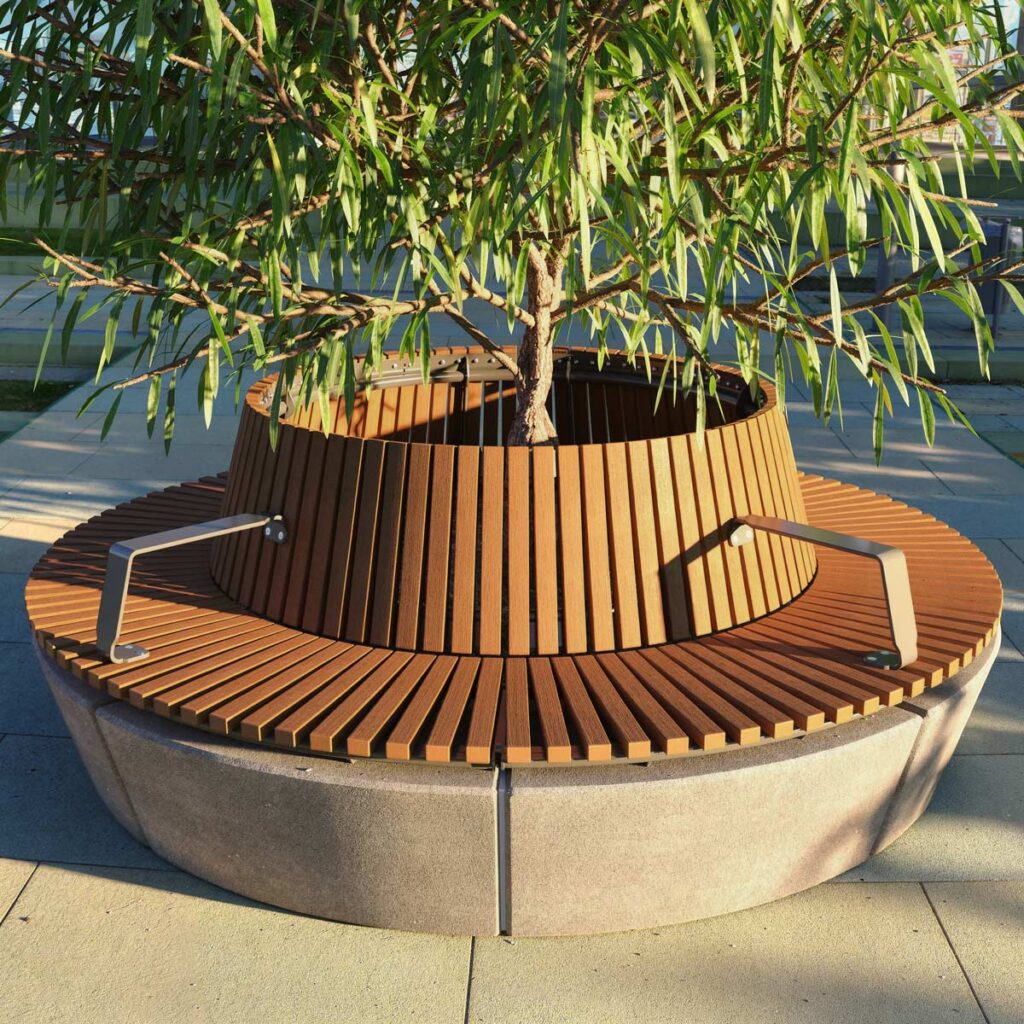
Tree seating is circular or semi-circular seating designed to wrap around the trunk of a tree or planter box. The tree (or planter box) is integrated into the seating design and becomes the focal point. Configurations range from full circles that wrap around the tree and offer seating on all sides to semi-circular arcs and segmented designs that leave openings.
Commonly found in parks, civic precincts, school grounds and urban streetscapes, tree seating combines the benefits of the tree’s natural shade with functional seating, creating spaces where people can gather.
Design Insight:
A unique aspect of tree seating is that every installation is customised to the tree. Councils need adequate clearance from the trunk and root zones. This is why tree seating is typically specified for some locations rather than rolled out uniformly across an entire area.
Traditional Park Seats & Benches: Definition, Materials and Applications
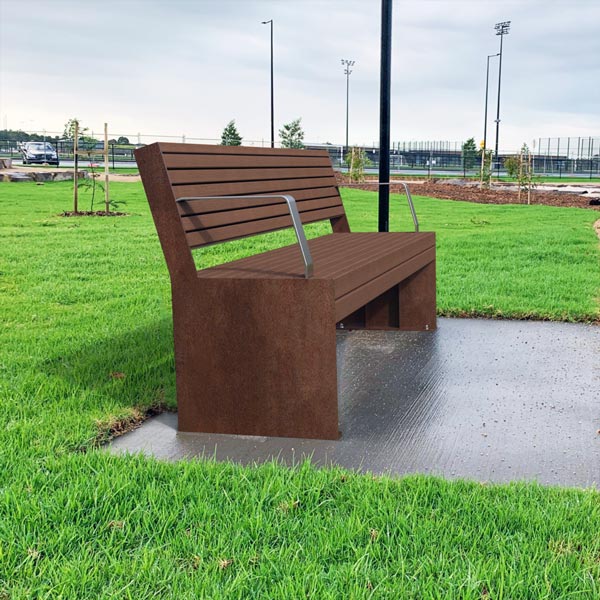
Traditional park seats are the workhorses of public seating. They include backless outdoor benches, seats with back, and designs with or without armrests. They are typically used in:
- Parks and reserves
- Sports precincts
- Streetscapes
- Playgrounds
- Walking trails
- Transport hubs and bus stops
- Commercial or retail developments
- Educational campuses
Common materials include timber, aluminium, stainless steel, galvanised steel, and recycled plastic, usually paired with galvanised frames for durability in outdoor conditions. They can be surface-mounted or in-ground. The range of material and configuration options means that traditional park benches and seats can be specified to suit nearly any layout. This flexibility makes them the default choice for the majority of public space projects.
When Tree Seating Works Best
Shaded Gathering Spaces
Established trees provide something that can be expensive in public seating: natural shade. Tree seating uses the tree’s natural canopy and places people directly under that shade, making it one of the most comfortable seating options in the Australian climate, especially during summer. With tree seating, councils avoid investing in expensive or bulky shade structures, making it useful in parks, streetscapes, and school and university campuses.
Placemaking
Tree seating creates a natural destination in a landscape. In placemaking terms, tree seating turns a tree from a backdrop into an anchor, helping activate areas of a park or streetscape that might otherwise be passed through rather than used.
Maximising Underused Space around Trees
The ground around a mature tree is often too obstructed for other furniture. Tree seating converts this dead space into a functional community asset, adding seating capacity without consuming any additional footprint. In tight streetscapes where every square metre matters, tree seats enhance urban design.
When Traditional Seats & Benches Work Best
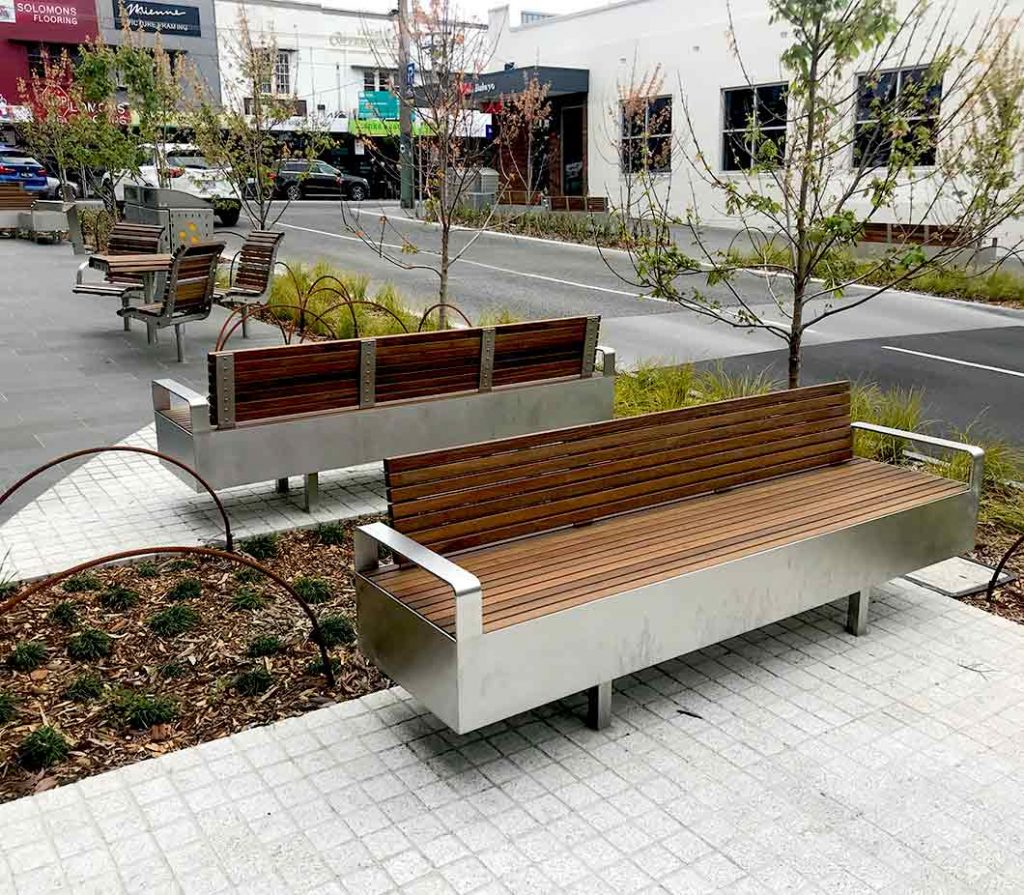
Along Pathways and Pedestrian Routes
Benches placed along footpaths, walking trails, and streetscapes give pedestrians regular rest points without interrupting movement. Positioning seats just off the path and facing the direction of activity keeps circulation clear while letting people watch the passing movement. This is a simple passive surveillance principle that helps spaces feel safer.
Accessibility-focused Seating
Traditional seats are generally the easier format for delivering DDA-compliant accessible street furniture. Features such as armrests to assist with sitting and standing, back support, and appropriate seat heights can be easily configured in park seats. Since they are not curved, adjacent clear space for wheelchair users and prams can be easily created to align with the general principles of street furniture under AS 1428.2.
Manufacturer’s tip:
Even though the Disability Discrimination Act (DDA) and AS 1428.2 set national accessibility standards, the final specification should always be assessed on a project-by-project basis. This ensures that seating arrangements align with both accessibility considerations and broader council design and usability goals. To discuss your site requirements, contact the team at Draffin Street Furniture, and we can help you find a good fit for your environment.
Flexible Seating Layouts
Layouts adapt to the needs of the space. Some common examples are seats arranged for conversation, spaced apart as rest points on walking trails, or arranged around tables in picnic and barbecue areas. They can also be installed in a line in high-traffic footpaths, offering more seating in a limited space.
Key Considerations Before Choosing Seating
Accessibility
Accessibility should be considered early in the design process. Factors such as circulation paths, transfer space, seat height, and armrests all influence how accessible a seating solution will be for different users. Tree seating is curved and offers less space to park prams or wheelchairs next to the seat. Many projects pair tree seating with accessible bench seats so the space works for everyone. Wherever possible, ensure the overall seating mix reflects AS 1428.2 accessibility principles rather than relying on any single furniture type to do everything.
Tree and Shrubbery Protection
In parks, nature reserves, and national parks, all benches sit close to trees and shrubbery. In these environments, protecting the long-term health of the plants is a priority. Designers should consider future trunk and root growth and drainage requirements. Tree seating accommodates these factors, while park benches and seats need to be spaced out to allow the tree and shrubbery to remain healthy.
These are general principles only. For protected trees, arborists’ advice and local council requirements inform the final approach. Our guide to designing around tree health covers this in more detail.

Maintenance Requirements
Materials and finishes should be chosen with maintenance requirements in mind. All seats require ongoing maintenance, although the requirements may differ according to materials and site conditions.
Tree seats will be more exposed to falling leaves, twigs and branches, and bird or animal droppings. Traditional seating in exposed locations carries its own demands, like UV exposure, weathering and higher wear in high-traffic areas. Maintenance planning should consider the environment and users together.
Manufacturer’s tip:
“Individual battens and components wear out at different rates. Replacing a single damaged or vandalised batten, rather than an entire bench, significantly reduces whole-of-life cost. Draffin Street Furniture can manufacture spare parts for exactly this reason.”
– Luke Gurney
Product Manager at Draffin Street Furniture
Material Durability
Public seating needs to withstand weather, heavy use, and occasional instances of vandalism. The environment, community usage, maintenance budgets, and design objectives affect material selection. For example, timber has a warm and natural look and feel, but requires periodic maintenance. Aluminium and steel offer strength and low upkeep, while recycled and composite materials resist moisture and rot.
For more information about materials and the best match for your environment, read our guide to street furniture materials.
Safety and Visibility
Seats with clear sightlines to paths and activity areas support passive surveillance. On the other hand, seating tucked into concealed corners has the opposite effect. Public seating should contribute to passive surveillance rather than create isolated spaces.
Matching the Seating to Your Space
There is no universally “best” option for outdoor benches or seats, only the option that fits your space. The right choice comes down to these factors:
- User behaviour: Are people using this space to gather in groups, or do they require rest stops while they walk?
- Project goals: Is the aim to increase dwell time, or add quick rest points?
- Environment: Are there established trees or shrubbery worth protecting?
- Pedestrian movement: How much space is there for seats to sit alongside movement routes without interrupting them?
- Available shade: Can an existing canopy do the work, or will seating sit in full sun?
In practice, the strongest public space designs usually combine both: tree seating as a feature, with traditional park benches and seats providing more coverage throughout the rest of the space.
Case Study in Using Tree Seating and Traditional Seating
Hartwell Shopping Area in Camberwell, Victoria
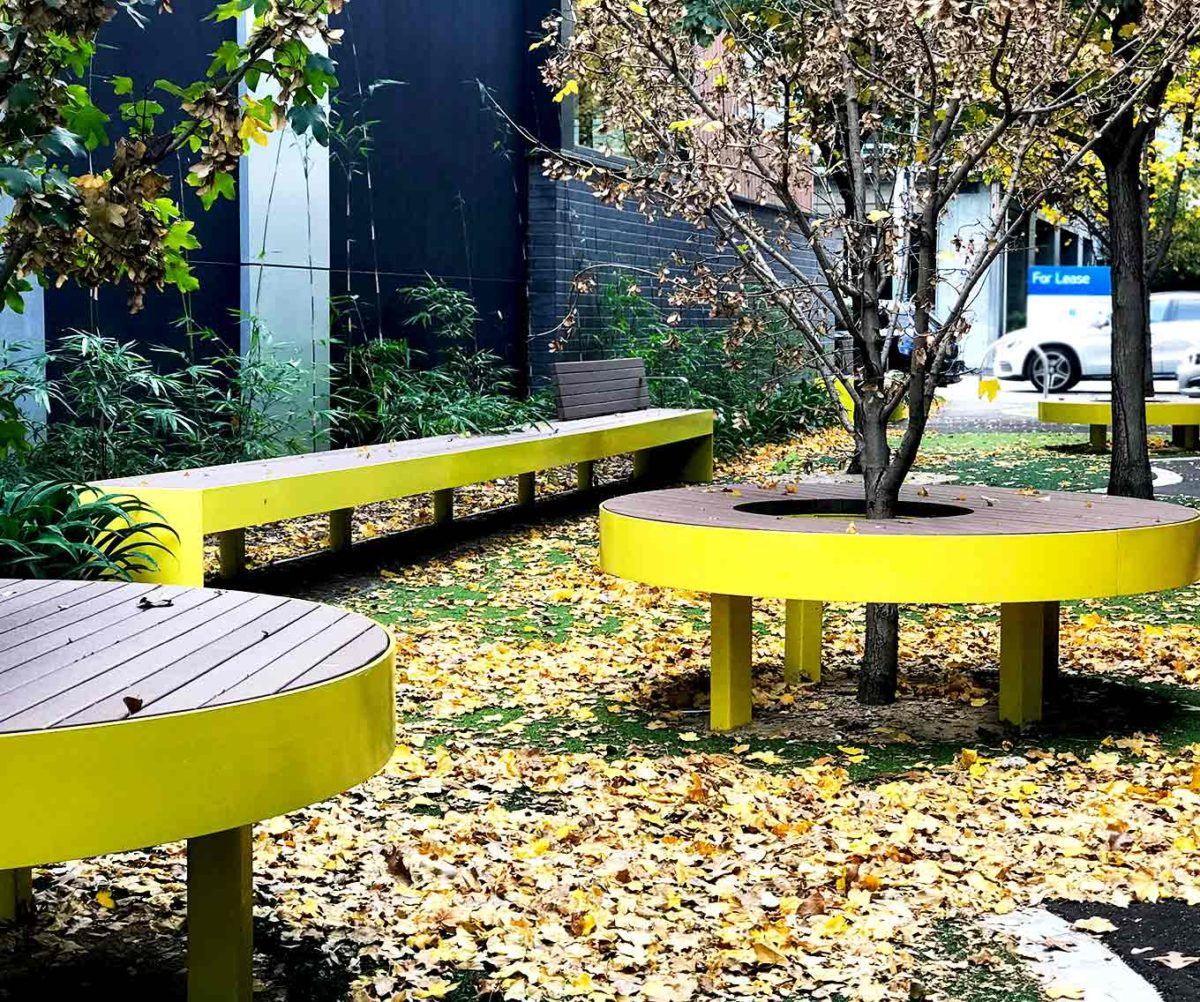
Draffin Street Furniture was contracted by the City of Boroondara to supply custom benches for a walkway upgrade in Camberwell, Victoria.
City of Boroondara’s landscape architect Joo Sung had a vision for vibrant and bright furniture that livens up the laneway. Draffin Street Furniture delivered reliable benches for high-traffic public use, met the design and aesthetic requirements, and complemented the existing trees.
Want to see more examples of our outdoor seating products? Explore our projects.
How Draffin Works with Specifiers
Working with the City of Boroondara is one example of how Draffin Street Furniture works with councils and architects. We are not the decision-maker on which seating a project needs. When a project team brings us a concept, our design team works to create a final product that matches the original vision. We supply the structural elements that make for safe and reliable public furniture. It’s a collaborative approach that respects the design intent while delivering furniture built to last for decades of public use.
Tree Seats vs Traditional Park Benches: Using Both to Create a Cohesive Public Space
Tree seating and traditional seats and benches aren’t competitors. Rather, they’re complementary tools for shaping seating in public spaces. Tree seating excels as a feature: creating shaded gathering points and making the most of the space around established trees. Traditional seating excels at coverage: lining pathways and supporting accessibility.
The best outcomes come from matching each format to the role it plays best, and from working with a supplier experienced in delivering both to the standards Australian public spaces require. At Draffin Street Furniture, we have worked with councils, architects, landscape designers and specifiers for close to 70 years to deliver seating that aligns with their design intent and community requirements. Explore Draffin’s range of street furniture, or get in touch to discuss your next project.